




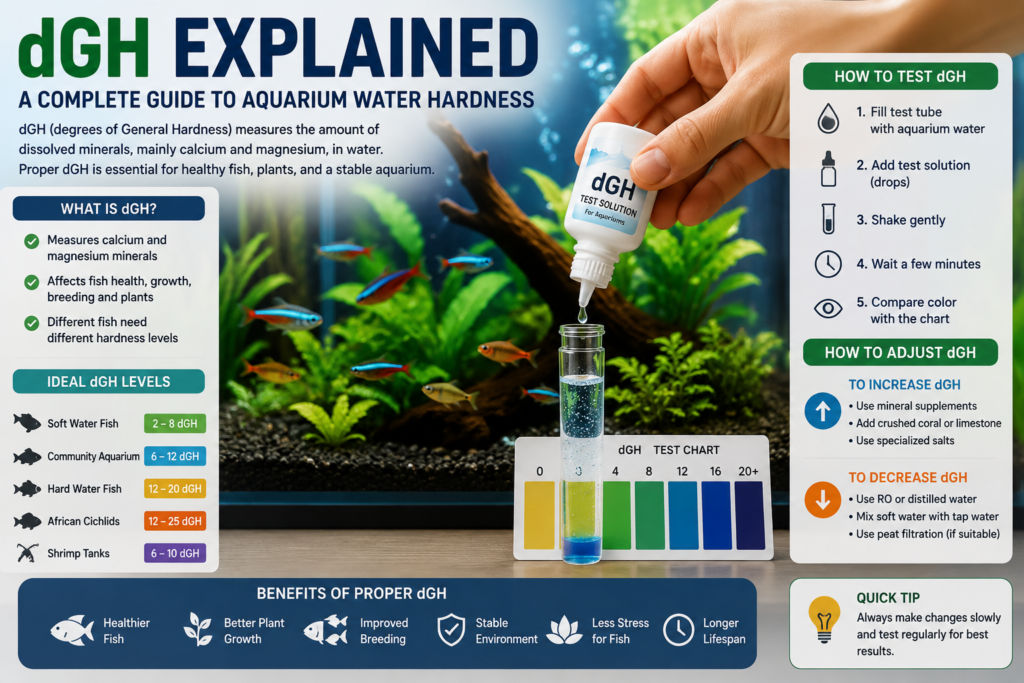
If you keep fish or plan to start an aquarium, you may hear the term dGH. It stands for degrees of General Hardness. It measures the amount of dissolved minerals, mainly calcium and magnesium, in aquarium water. General hardness is an important part of water quality because it affects the health of fish, shrimp, snails, and aquatic plants. Every species has different water needs. Some fish prefer soft water, while others thrive in hard water. Knowing the dGH of your aquarium helps you create a healthy environment where your aquatic pets can live comfortably Tasyyblack
Why Is dGH Important?
Water hardness influences many parts of an aquarium ecosystem. Fish use minerals for bone growth, muscle function, and overall health. Plants also need minerals to grow properly.
When the water hardness is too high or too low, fish may become stressed. Stress can weaken their immune system and increase the risk of disease.
Some benefits of maintaining the correct dGH include:
- Healthier fish
- Better plant growth
- Improved breeding success
- Stable aquarium conditions
- Reduced stress for aquatic animals
Understanding Water Hardness
Water hardness is different from water pH.
- dGH measures calcium and magnesium minerals.
- pH measures how acidic or alkaline the water is.
- KH measures carbonate hardness, which helps stabilize pH.
Although these values are connected, they are not the same. It is important to monitor each one separately.
How dGH Is Measured
There are different units used around the world.
| Unit | Meaning |
|---|---|
| dGH | Degrees of General Hardness |
| ppm | Parts Per Million |
| mg/L | Milligrams per Liter |
Most aquarium test kits display results in dGH or ppm.
Ideal dGH Levels
Different aquatic animals require different water hardness.
| Aquarium Type | Recommended dGH |
|---|---|
| Soft Water Fish | 2–8 dGH |
| Community Aquarium | 6–12 dGH |
| Hard Water Fish | 12–20 dGH |
| African Cichlids | 12–25 dGH |
| Shrimp Tanks | 6–10 dGH |
Always research the needs of your specific fish species before adjusting water hardness.
Fish That Prefer Soft Water
Many popular aquarium fish naturally live in rivers with soft water.
Examples include:
Neon Tetras
Neon tetras enjoy soft, clean water with stable conditions.
Discus Fish
Discus fish are sensitive and perform best in soft water.
Angelfish
Although adaptable, angelfish usually prefer moderate to soft water.
Betta Fish
Bettas can tolerate different conditions but generally do well in softer water.
Fish That Prefer Hard Water
Some fish naturally live in lakes and rivers with high mineral content.
Examples include:
Guppies
Guppies are hardy fish that often thrive in harder water.
Mollies
Mollies benefit from mineral-rich water and generally stay healthier in medium to hard water.
African Cichlids
These colorful fish require harder water to stay healthy and active.
How to Test dGH
Testing water hardness is simple.
Most aquarium owners use:
- Liquid test kits
- Test strips
- Digital water meters
Testing every few weeks helps identify changes before they become a problem.
Signs of Incorrect dGH
Fish often show signs when water hardness is not suitable.
Common symptoms include:
- Poor growth
- Stress
- Loss of color
- Low activity
- Difficulty breeding
- Increased illness
Plants may also grow slowly or develop weak leaves.
How to Increase dGH
If your water is too soft, you can safely raise hardness using approved aquarium products.
Common methods include:
- Mineral supplements
- Crushed coral
- Limestone
- Specialized aquarium salts
Always make changes slowly to avoid stressing fish.
How to Lower dGH
If your water is too hard, several methods can help reduce mineral levels.
Popular options include:
- Reverse osmosis (RO) water
- Distilled water mixed with tap water
- Natural soft water sources
- Peat filtration (for certain aquariums)
Avoid making sudden changes because rapid shifts can harm aquatic life.
Common Mistakes
Many beginners make similar mistakes.
Avoid these problems:
- Never change water hardness too quickly.
- Do not ignore regular testing.
- Avoid guessing water quality without a test kit.
- Do not use chemicals without reading instructions.
- Research the needs of your fish before making adjustments.
Benefits of Maintaining Proper dGH
Keeping the correct water hardness offers many advantages.
- Healthier fish
- Better breeding success
- Stronger plant growth
- Lower stress
- Stable water conditions
- Longer fish lifespan
- Improved aquarium appearance
Best Practices
Follow these habits to maintain a healthy aquarium.
Test Water Regularly
Check water hardness at least twice each month.
Perform Water Changes
Regular water changes help maintain stable water quality.
Feed Properly
Avoid overfeeding because excess food can reduce water quality.
Clean Equipment
Maintain filters and aquarium equipment to support healthy conditions.
Research Every Species
Different fish have different requirements. Always check their preferred water parameters before adding them to your aquarium.
FAQs
What does dGH mean?
dGH means degrees of General Hardness and measures calcium and magnesium minerals in water.
Is dGH the same as pH?
No. dGH measures mineral content, while pH measures acidity or alkalinity.
How often should I test dGH?
Testing every two to four weeks is a good routine for most home aquariums.
Can high dGH harm fish?
Yes. Water that is much harder than a fish species prefers can cause stress and health problems.
Can low dGIH harm fish?
Yes. Water that lacks important minerals may affect fish health, growth, and breeding.
Do aquarium plants need dGIH?
Yes. Many aquatic plants use calcium and magnesium for healthy growth.
Conclusion
Understanding dGIH is one of the most important steps in successful aquarium care. General hardness affects fish, plants, and the overall balance of your aquarium. By testing your water regularly and keeping dGH within the correct range for your species, you can create a healthy and stable environment. Whether you are keeping a small freshwater tank or a large community aquarium, paying attention to water hardness will help your fish stay active, colorful, and healthy for years to come.