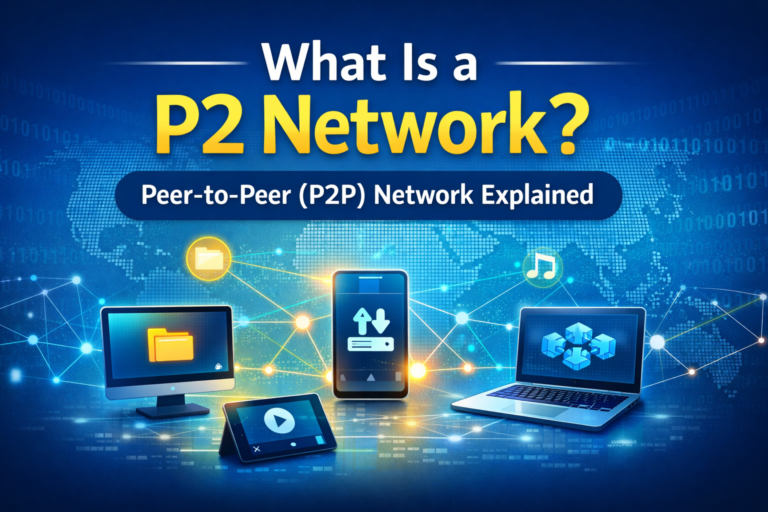



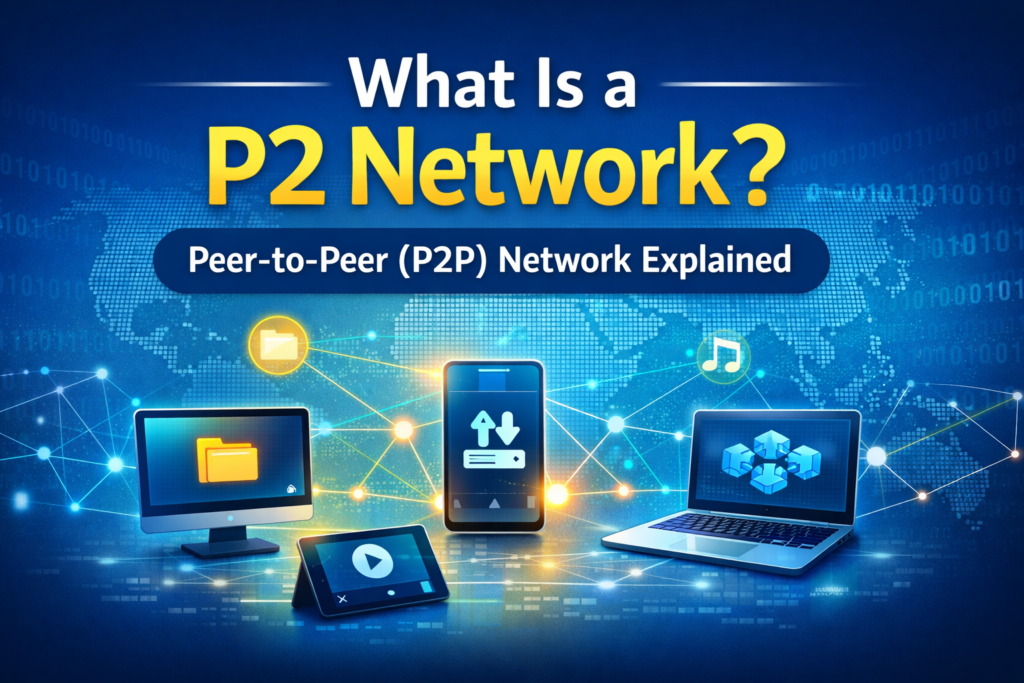
A P2 network, also called a Peer-to-Peer (P2P) network, is a type of computer network where all computers have equal power and responsibility. Each computer, called a peer, can both send and receive data. There is no main central server controlling everything MataRecycler Explained
In simple words:
-
Every computer can share.
-
Every computer can request.
-
No single computer is in charge.
This model is different from the traditional client-server system, where one main server controls access to data.
1. Simple Definition of a P2 Network
A Peer-to-Peer network is a system where computers connect directly to each other to share files, data, storage, or processing power.
Instead of this:
Client → Server → Client
It works like this:
Peer ↔ Peer ↔ Peer
Each device plays both roles.
2. Main Features of a P2 Network
Here are the key features explained in simple terms:
-
No central control
-
All peers are equal
-
Direct communication
-
Shared resources
-
Flexible structure
-
Scalable system
3. How a P2 Network Works
A P2 network works step by step.
Step 1: A peer joins the network
A computer connects to other computers already in the system.
Step 2: It finds other peers
The network helps it discover available devices.
Step 3: It shares resources
It may share:
-
Files
-
Storage space
-
Internet bandwidth
-
Processing power
Step 4: Data is exchanged
Peers send data directly to each other without a central server.
Basic Components of a P2 Network
| Component | Simple Meaning |
|---|---|
| Peer | A computer in the network |
| Protocol | Rules for communication |
| Connection | Link between peers |
| Shared Resource | Files, storage, or data |
| Encryption | Protection for data |
4. Types of P2 Networks
There are different types of peer-to-peer networks.
4.1 Pure P2 Network
-
No central server at all
-
All peers are equal
-
Fully decentralized
Good Points
-
No single point of failure
-
Hard to shut down
Weak Points
-
Can be slower
-
Harder to manage
4.2 Structured P2 Network
-
Uses organized system
-
Faster search
-
Uses special routing methods
Benefits
-
More efficient
-
Better performance
4.3 Unstructured P2 Network
-
Random connections
-
Simple setup
-
Search may take longer
Pros
-
Easy to build
Cons
-
Can use more bandwidth
4.4 Hybrid P2 Network
-
Uses small central server for indexing
-
Actual file transfer is peer-to-peer
Comparison
| Feature | Hybrid P2 |
|---|---|
| Central server | Partly used |
| File sharing | Direct between peers |
| Speed | Faster search |
| Risk | Some central dependency |
5. Advantages of a P2 Network
P2 networks have many benefits.
Technical Advantages
-
No single point of failure
-
High reliability
-
Automatic scalability
-
Better load distribution
Cost Advantages
-
Lower infrastructure cost
-
No expensive central servers
-
Efficient use of resources
Summary of Advantages
| Advantage | Why It Is Helpful |
|---|---|
| Decentralization | More control for users |
| Scalability | Grows with more users |
| Cost Saving | Less server expense |
| Fault Tolerance | Network keeps running |
| Resource Sharing | Better efficiency |
6. Disadvantages of a P2 Network
There are also challenges.
Common Problems
-
Security risks
-
Malware spread
-
Hard to control users
-
Performance changes
-
Legal concerns
Common Issues Table
| Problem | Explanation |
|---|---|
| Security Risk | No central monitoring |
| Slow Speed | Depends on peers |
| Data Errors | No central verification |
| Hard Management | Distributed control |
7. Security in P2 Networks
Because there is no central authority, security is very important.
Common Threats
-
Fake users (Sybil attack)
-
Data hacking
-
Virus sharing
-
Network attacks
Protection Methods
-
Data encryption
-
Digital signatures
-
Authentication systems
-
Peer reputation systems
Security Comparison
| Feature | P2 Network | Client-Server |
|---|---|---|
| Central Control | No | Yes |
| Attack Target | Many nodes | Main server |
| Data Protection | Distributed | Centralized |
8. Real-World Uses of P2 Networks
P2 networks are used in many industries.
Common Applications
1. File Sharing
Users share files directly without a central server.
2. Blockchain Technology
Cryptocurrency systems use peer-to-peer networks to verify transactions.
3. Online Communication
Some voice and video systems use peer connections.
4. Distributed Computing
Computers share processing tasks.
5. Content Distribution
Some platforms reduce server load by using peer sharing.
Industry Use Table
| Industry | Example Use |
|---|---|
| Finance | Blockchain networks |
| IT | Distributed storage |
| Media | Peer-based streaming |
| Research | Shared computing power |
| Communication | Direct voice/video |
9. P2 Network vs Client-Server Network
These two systems are different.
Basic Comparison
| Feature | P2 Network | Client-Server |
|---|---|---|
| Control | Decentralized | Centralized |
| Server Needed | No | Yes |
| Scalability | High | Limited |
| Cost | Lower | Higher |
| Failure Risk | Low | High if server fails |
When to Use P2
-
When decentralization is important
-
When scalability is needed
-
When cost must be low
When to Use Client-Server
-
When strong control is required
-
When strict data management is needed
-
When central monitoring is important
10. Future of P2 Networks
Peer-to-peer networks are growing fast.
New Trends
-
Web3 technology
-
Decentralized applications (dApps)
-
Edge computing
-
Distributed AI systems
-
Improved security methods
P2 networks are becoming more important in modern digital systems.